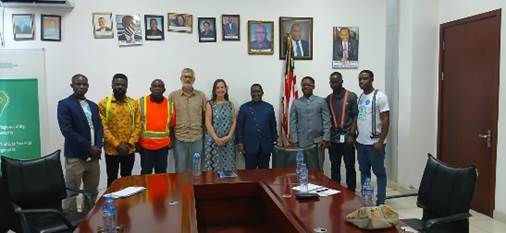
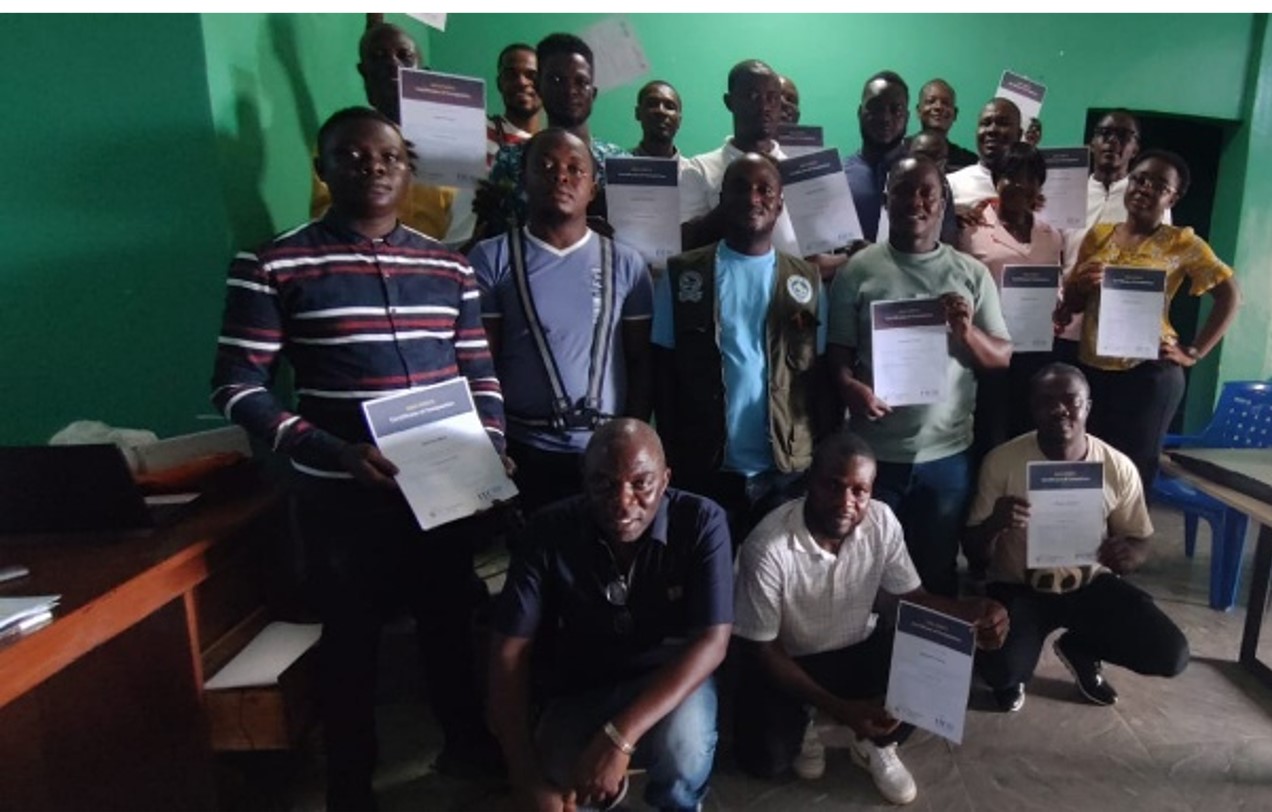
The Dock Workers’ Union of Liberia (DOWUL) initiated the roll out of the Occupational Safety & Health (OSH) training for its members following a Train the Trainers workshop organised by the ITF and the ITF Seafarers’ Trust in July.
A three-day Occupational Safety and Health in Ports (OSH) training was held by DOWUL in the port of Monrovia training 20 port workers in the fundamentals of Occupational Safety and Health in ports with an additional training planned in the port of Buchanan at the end of September.
Ballah Kpadeh, President General of the Dock Workers' Union of Liberia said, “The recent OSH trainings in Liberia show that our members are not alone and I’m confident that the DOWUL and ITF partnership will continue to bring more opportunities in the future.”
More trainings are planned for the 9,000-member strong union in the coming year.
Katie Higginbottom, Head of ITF Seafarers’ Trust said, “We’re really impressed with the proactive approach of this union and the positive response from the membership. It’s great to see that the OSH Ports app is reaching a wider audience and encouraging greater awareness of workplace hazards and risks. The port environment can be lethal so all efforts to improve safety controls are a must.”
This training comes after the ITF Seafarers’ Trust (ITFST) together with the International Transport Workers’ Federation (ITF) had officially launched its OSH Ports occupational safety and health app and online training course in Liberia in July, expanding access to practical, port-specific safety knowledge for workers across the region.
Participants from ITF affiliated unions, namely the Dock Workers' Union of Liberia (DOWUL), United Seamen, Ports and General Workers' Union of Liberia (USPOGUL) and United Workers’ Union of Liberia (UWUL), together with representatives of other stakeholders were undertaking the three-day Train the Trainers’ workshop in Monrovia.
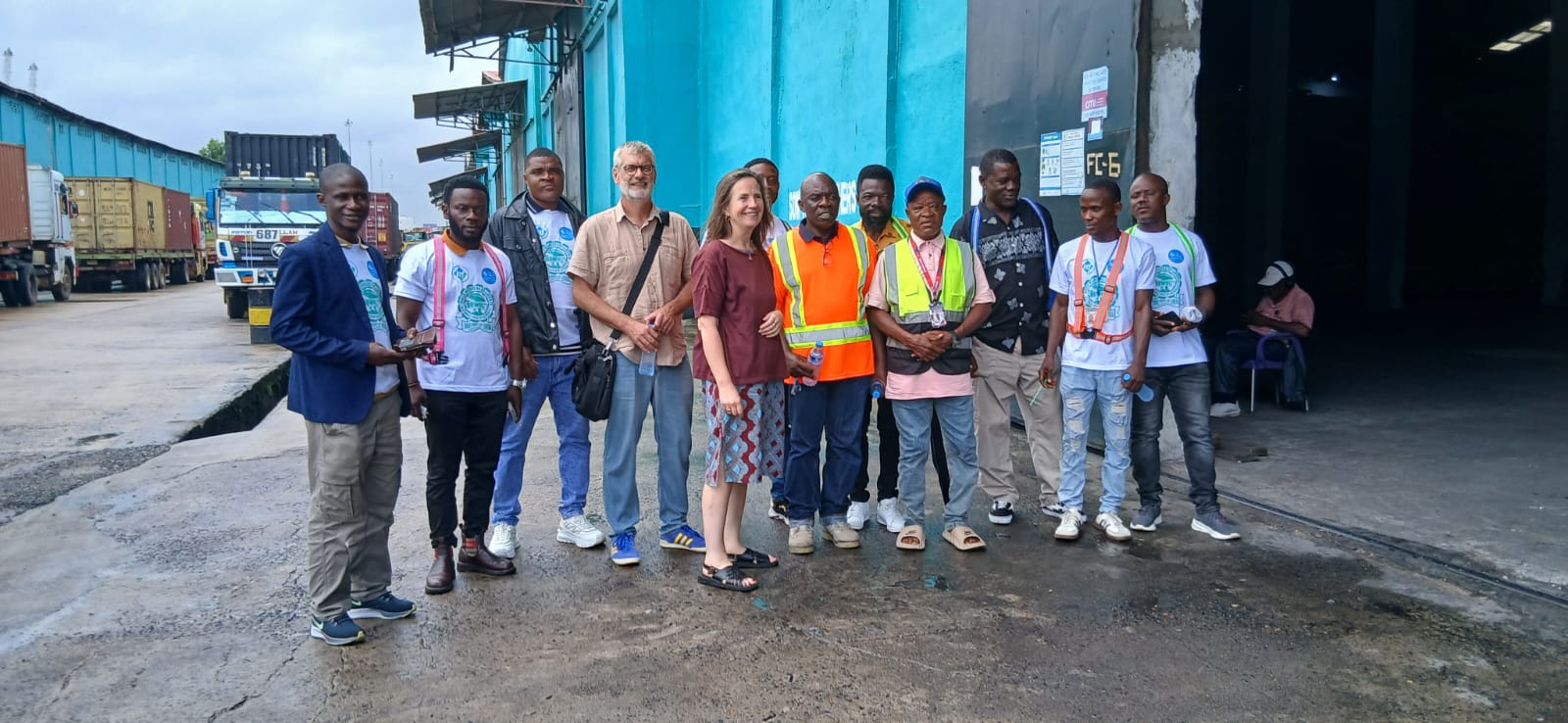
The launch in Anglophone Africa marks the latest step in the programme’s international expansion. Originally developed for the Arab World and later rolled out in Latin America and the Caribbean, the course has been adapted to support workers in different regional contexts while maintaining a strong foundation in national, regional and international occupational safety and health standards.
Bayla Sow, Regional Secretary ITF Africa said, “We are delighted that the ITF Seafarers’ Trust brings the OSH App to the African region with the training in Liberia. It is an essential tool for workers who need training on the hazards in their workplace.”
Developed by industry experts, with contributions from ITF Dockers’ unions and supported by the International Labour Organization’s International Training Centre (ILO-ITC), the free OSH Ports course covers the fundamentals of occupational safety and health in the ports sector. It is designed to help workers recognise hazards, understand risks and strengthen safety practices in their workplaces.
Ports remain among the most hazardous working environments in global transport, making effective safety training a critical priority. The OSH Ports course was developed in response to union requests for practical tools that enable workers to engage confidently with employers and other stakeholders on improving safety and health in ports.
The course will be promoted through ITF-affiliated unions, and participants who successfully complete the training can take an assessment through the app or website and receive a certificate of completion supported by the ILO-ITC.
Workers can complete the course independently or use it as part of group training in the workplace.
“Ports are dangerous environments and dockers face deadly risks every day due to a lack of adequate investment in safety, and safety and health education,” said Steve Biggs, ITF’s Dockers Section Senior Assistant. “It’s the responsibility of ports, governments, and global operators to invest in control measures and safer equipment, but the ultimate goal of the OSH App is to increase worker participation in all aspects of health and safety in ports and reduce serious injuries and fatalities in our industry.”
More information is available on the OSH Ports course website: https://www.oshports.org/